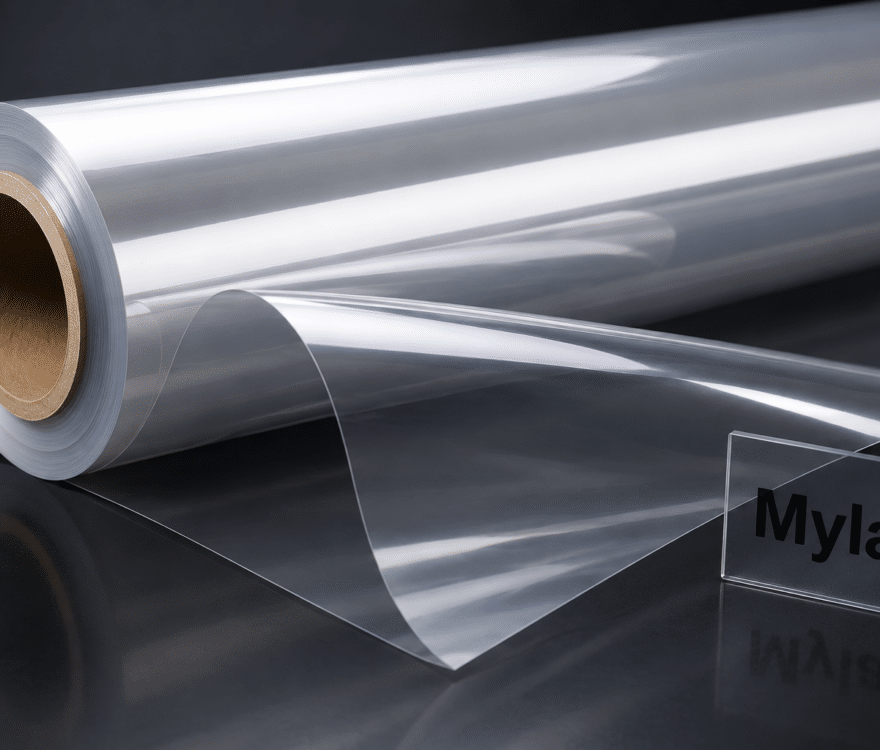
Mylar® is a branded polyester film. In drawings, BOMs, and RFQs, however, “Mylar” is often used more broadly to describe PET polyester film or BOPET film. That distinction matters because the material name alone does not define thickness, grade, adhesive backing, temperature range, electrical performance, cutting method, or tolerance.
A simple “Mylar” callout may be acceptable for early discussion, but it is usually not enough for manufacturing. The part may require a specific Mylar® grade, or it may only need an approved PET or BOPET film with similar performance. This guide explains what Mylar is, how it relates to PET and BOPET film, where it is commonly used, and what details should be confirmed before selecting it for custom parts or prototypes.
What Is Mylar?
Mylar is commonly understood as a polyester film material. More precisely, Mylar® is a branded polyester film, while “Mylar” is often used as a shorthand term for thin PET or BOPET polyester film.
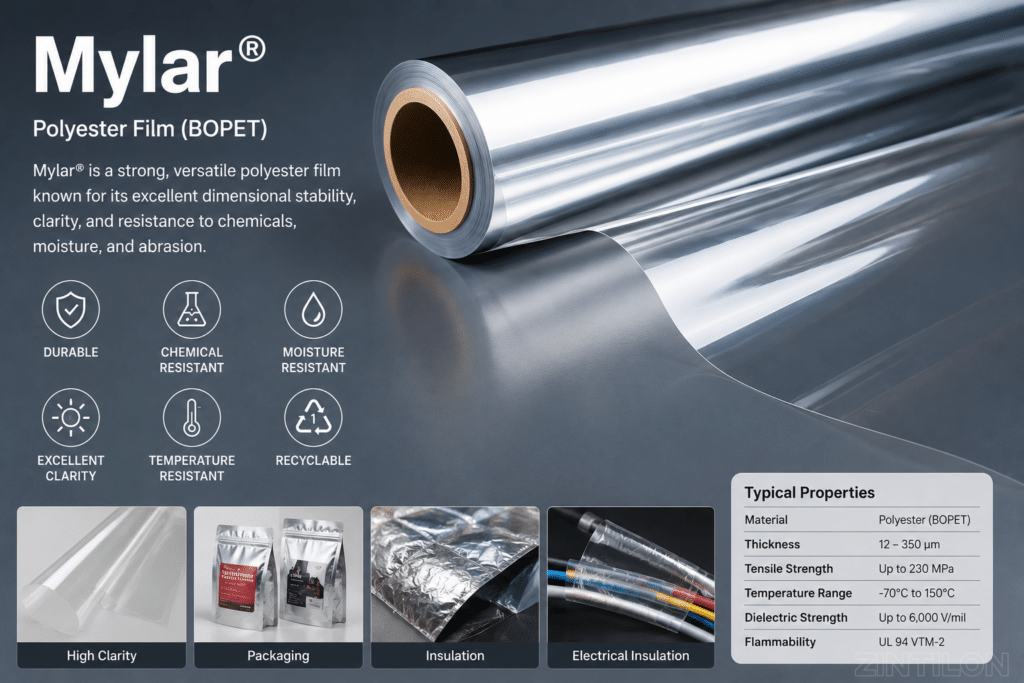
In a manufacturing drawing, the material callout should be specific enough to support process selection, inspection, and cost estimation. If a drawing only lists “Mylar,” several details may still be unclear:
- Whether a specific Mylar® grade is required
- Whether PET polyester film or BOPET film is acceptable as an equivalent
- Required thickness and thickness tolerance
- Whether the film needs adhesive backing
- Whether the part is used for insulation, spacing, labeling, protection, or separation
- Exposure to heat, chemicals, flexing, compression, or electrical load
- Required edge quality, hole size, or dimensional tolerance
Mylar should be treated as a starting material description, not a complete engineering specification.
Is Mylar the Same as PET or BOPET Film?
Mylar, PET film, BOPET film, and polyester film are closely related terms, but they are not always interchangeable in drawings or RFQs.
| Term | What It Means | Manufacturing Note |
|---|---|---|
| Mylar | Mylar® is a branded polyester film. “Mylar” is often used commercially to refer to PET or BOPET film. | Confirm whether a specific Mylar® grade is required or whether equivalent PET or BOPET film is acceptable. |
| PET film | Polyethylene terephthalate film, a broader polyester film category. | Confirm grade, thickness, surface treatment, temperature range, and application requirements. |
| BOPET film | Biaxially oriented PET film with improved film stability and mechanical behavior. | Often used for stable thin-film applications, but grade and thickness still matter. |
| Polyester film | A general material category that may include PET-based films. | Too broad for purchasing unless performance requirements are defined. |
PET is the polymer family. BOPET means biaxially oriented PET film, which is processed to improve film stability and mechanical behavior. Mylar® belongs to the branded polyester film category, but not every polyester film should automatically be called Mylar®.
The practical question is whether the application truly requires a specific branded film or whether an approved PET or BOPET film can meet the same functional requirement. Clarifying this early can reduce material ambiguity and avoid unnecessary sourcing restrictions.
Key Properties of Mylar Material
Mylar material is often selected for thin film applications that need flexibility, dimensional stability, and insulation performance. Actual performance depends on grade, thickness, surface treatment, adhesive structure, and operating environment.
Dimensional stability
Mylar film can be useful for spacers, overlays, labels, and insulation layers where shape and thickness need to remain controlled.
Flexibility
Because Mylar is usually supplied as film or thin sheet, it suits applications that require bending, layering, or placement between components.
Electrical insulation potential
Mylar film is often used in insulation-related applications, especially in electronics and hardware assemblies. Required dielectric performance should be confirmed by grade, thickness, and assembly design.
Moisture resistance
Polyester film can support protective or barrier-related functions, but performance depends on film construction, exposure time, temperature, and working environment.
Tensile strength
Mylar can provide useful strength as a thin film, but it should not be treated as a structural plastic. It is not normally selected for high-load mechanical parts.
Transparency, opacity, or metallized finish
Clear, white, opaque, printed, and metallized film options may be selected depending on visual, protective, reflective, or functional requirements.
Temperature and chemical resistance
Temperature and chemical performance should be checked against the exact grade, exposure conditions, adhesive type, and operating environment. The material name alone is not enough for high-temperature or chemically exposed applications.
Mylar can be a useful film material, but it is not a universal plastic for every mechanical design.
Common Forms of Mylar Film and Sheet
Mylar is usually used as film or thin sheet rather than thick structural stock. The selected form affects cutting method, edge quality, assembly behavior, inspection, and cost.
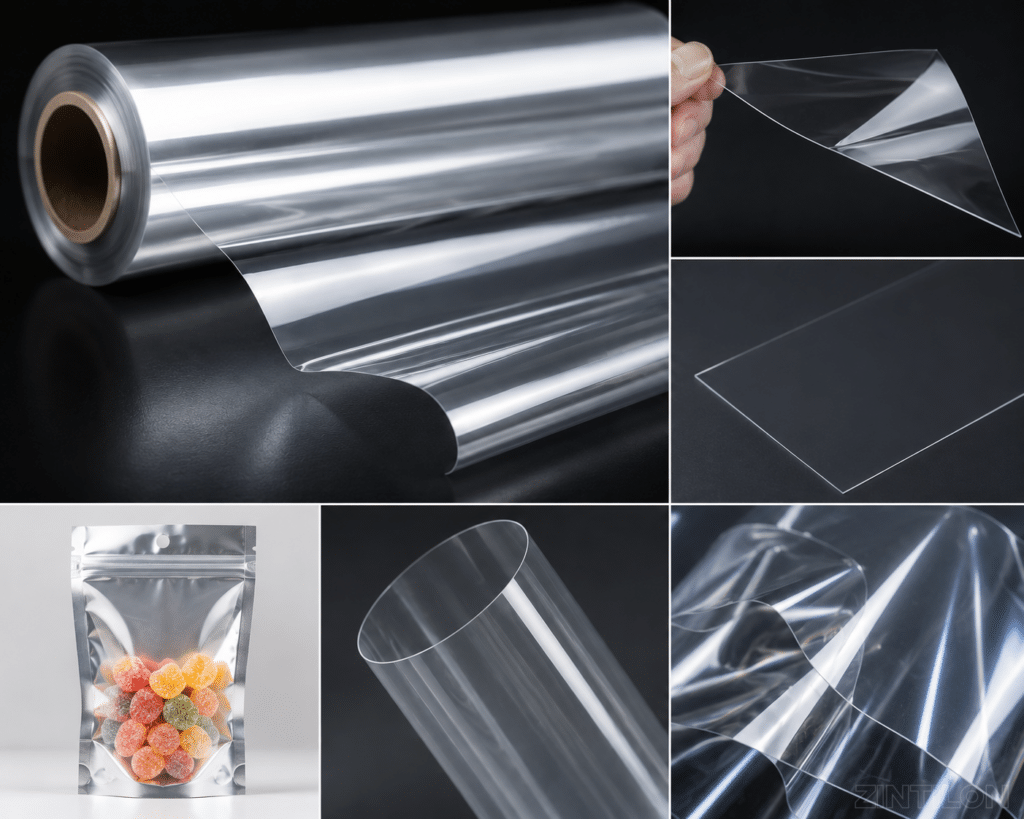
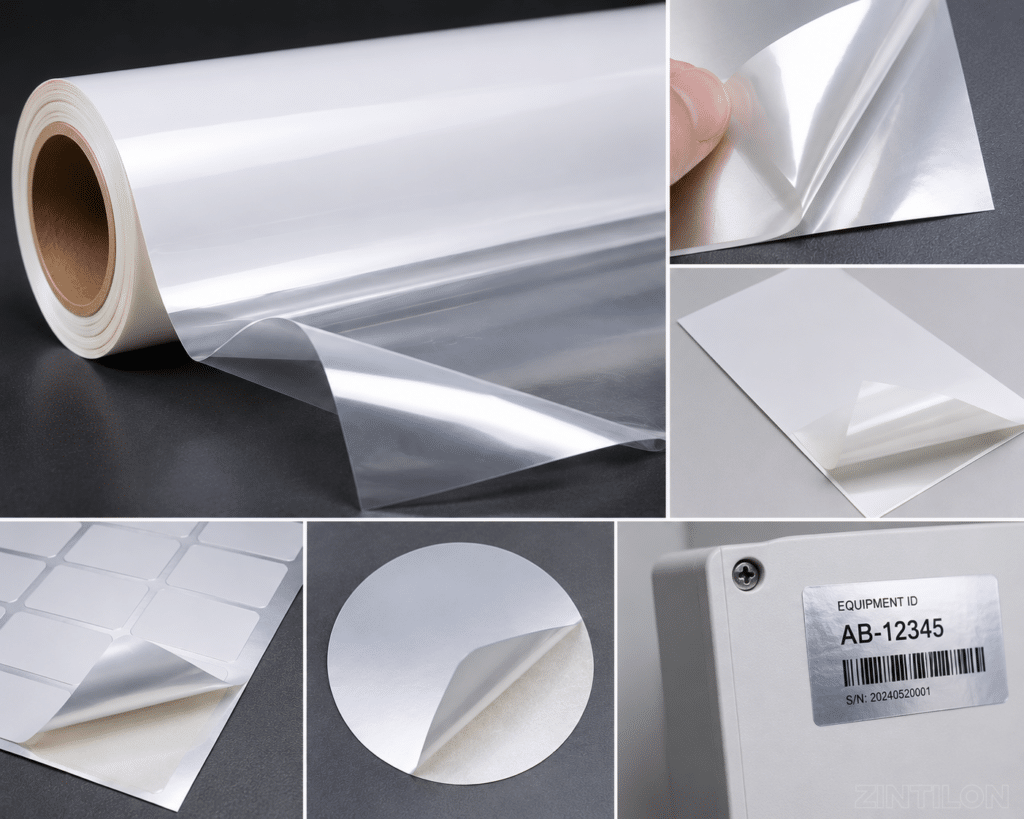
Clear Mylar Film
Clear Mylar film is used when visibility, surface protection, insulation, or separation is required. Typical uses include protective overlays, labels, thin windows, separators, and insulation layers.
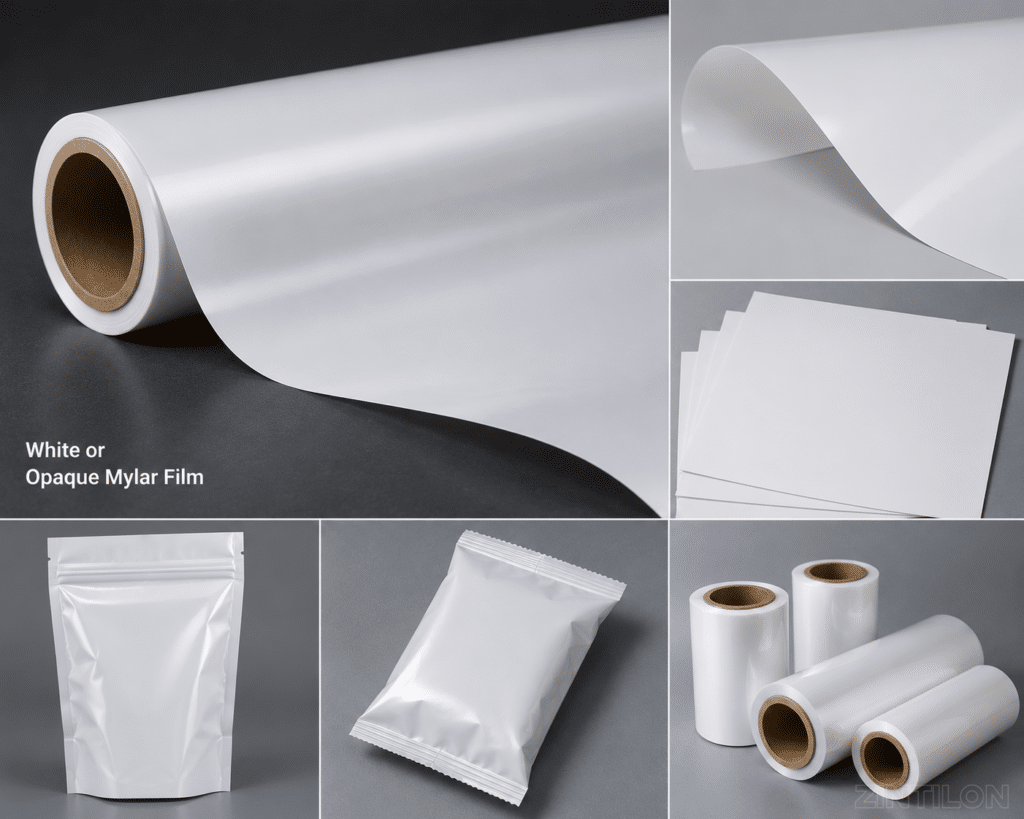
White or Opaque Mylar Film
White or opaque polyester film may be selected for visual separation, identification, light blocking, or a clean visible surface. It can be relevant for labels, spacers, overlays, and industrial marking parts.
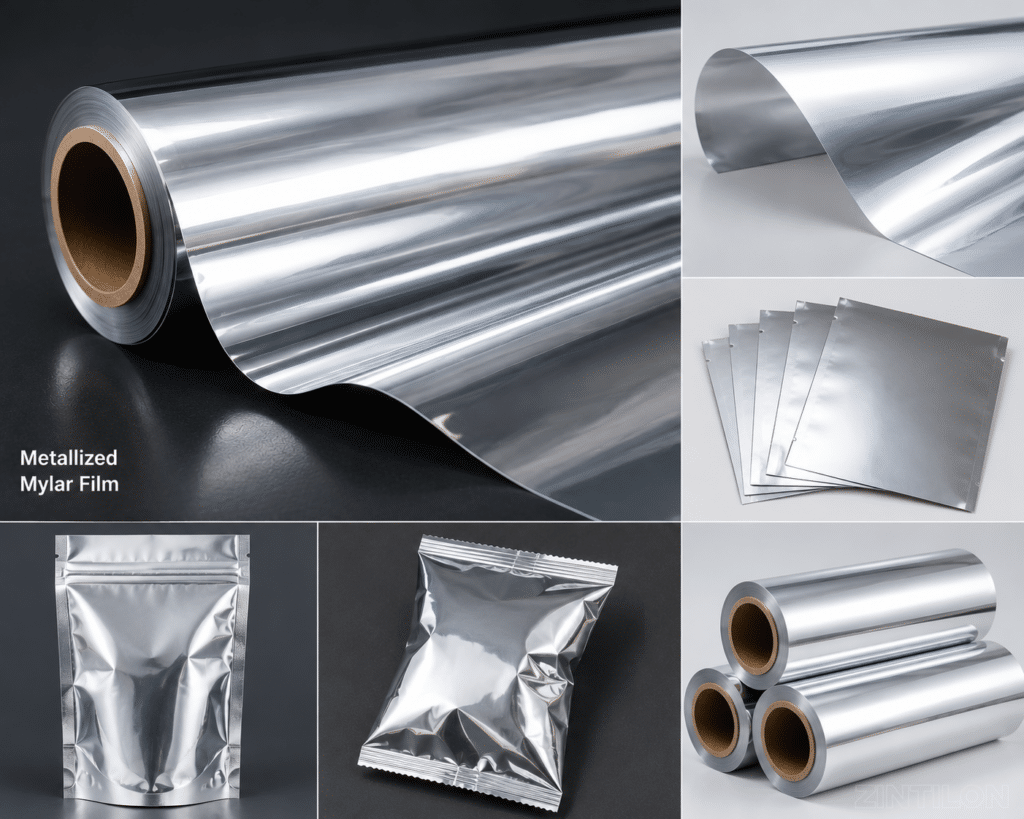
Metallized Mylar Film
Metallized Mylar film may be used for reflectivity or barrier-related functions. If the material is being considered for shielding-related use, performance depends on the metal layer, film structure, grounding method, assembly design, and test requirement. It should not be assumed from the word “metallized” alone.
Adhesive-Backed Mylar or PET Film
Adhesive-backed film can simplify assembly, but it also changes the manufacturing risk. Adhesive type can affect cutting quality, liner handling, edge cleanliness, storage, bond strength, adhesive squeeze-out, and long-term reliability. If adhesive backing is required, it should be specified clearly.
What Is Mylar Used For in Manufacturing?
Mylar is usually considered when the component needs to be thin, lightweight, flexible, and stable. Common applications include:
- Mylar insulation layers
- PET film spacers and thin washers
- Protective overlays
- Labels and identification parts
- Membrane switch layers
- Thin separators in assemblies
- Prototype insulation components
- Protective films for surfaces or parts
- Reflective or barrier film applications
A thin insulation layer between components is a typical example. Mylar or PET film may be suitable, but thickness, dielectric performance, temperature exposure, assembly pressure, and installation method still need review.
A thin spacer is another common use case. PET or BOPET film may work when the spacer does not carry significant load and the thickness tolerance is acceptable. If the design includes small holes, narrow slots, sharp internal corners, or tight edge requirements, the cutting method and inspection approach become more critical.
For early-stage parts, rapid prototyping can help validate thickness, fit, material behavior, and assembly requirements before the design is released for production.
When Should Mylar Be Selected?
Mylar is most relevant when the design needs a film-based material rather than a thick rigid plastic. It may be a good choice when:
- The component is thin and flexible
- Electrical insulation is required
- The part works as a spacer, separator, label, overlay, or protective layer
- Dimensional stability matters
- The assembly benefits from low weight
- PET polyester film or BOPET film can meet the required function
- The part does not need high stiffness or load-bearing strength
Material availability and sourcing flexibility should also be considered. Requiring a specific Mylar® grade may limit material options. If a functional PET or BOPET equivalent is acceptable, the drawing or RFQ should state that clearly.
During prototype or NPI work, the material callout should be settled before sample production whenever possible. If the material changes after samples are made, fit checks, insulation checks, adhesive tests, or assembly trials may need to be repeated.
When Mylar May Not Be the Right Material
Mylar is not suitable for every plastic part. It may not be the right choice for:
- High-load structural components
- Thick machined plastic parts
- Parts requiring high rigidity
- Complex 3D geometries
- Very high-temperature environments unless the exact grade supports the requirement
- Harsh chemical exposure without grade verification
- Applications requiring specific flame, electrical, medical, or regulatory documentation unless confirmed
Some searches for “Mylar plastic” come from the assumption that Mylar behaves like a general-purpose engineering plastic. That can lead to poor material selection. Mylar is mainly a film material. If the part needs threads, deep pockets, rigid walls, heavy mechanical loading, or complex 3D features, another plastic material may be more appropriate.
If the film is used near a metal housing, sheet metal bracket, PCB, battery component, or conductive part, the assembly should also be reviewed for edge clearance, compression, burr risk from adjacent parts, and insulation distance. The film may be suitable, but the assembly design can still create reliability issues.
Can Mylar Be CNC Machined?
Thin Mylar film is not usually processed like a conventional CNC machined plastic. It is more commonly slit, die cut, laser cut, laminated, printed, or converted through film-processing methods.
CNC machining may be reviewed for thicker PET-based sheets or supported plastic components, but the decision depends on material thickness, part geometry, fixturing, tolerance, and edge quality requirements. Thin flexible materials can move, wrinkle, lift, or deform during processing. Small holes, narrow slots, sharp corners, and tight internal features can also affect cutting quality and cost.
For thin film parts, common quality risks include:
- Heat marks from laser cutting
- Melted or hardened edges
- Adhesive squeeze-out on adhesive-backed film
- Edge lifting or delamination
- Dimensional distortion after cutting
- Difficult inspection on very thin or flexible features
For applicable plastic parts, CNC machining can be reviewed based on the drawing, material thickness, feature design, fixturing method, and inspection requirements. For thin Mylar film parts, the manufacturing process should be confirmed before quoting or production planning.
Cost, Quality, and DFM Factors for Mylar Parts
The cost of a Mylar or PET film part is not determined only by material price. Design details, inspection needs, and purchasing requirements can have a major impact.
| Factor | Cost or Quality Impact |
|---|---|
| Brand-specific Mylar® requirement | May limit sourcing if equivalent PET or BOPET film is not allowed. |
| Tight thickness tolerance | Can affect material availability, stack-up control, and inspection effort. |
| Small holes or narrow slots | May increase cutting difficulty and require process review. |
| Adhesive backing | Adds variables such as adhesive flow, liner handling, bonding, and edge cleanliness. |
| Sharp internal corners | Can affect durability, cutting quality, and inspection consistency. |
| Surface treatment or coating | May affect printing, bonding, optical behavior, and supplier options. |
| Electrical insulation requirement | May require grade confirmation and functional test criteria. |
| Documentation requirement | Datasheets, certificates, or test records can affect sourcing and timing. |
| Visual edge requirements | May increase inspection effort and limit cutting method options. |
From a DFM perspective, define what the part must do rather than relying only on the material name. A spacer, label, insulation layer, and protective overlay may all use PET polyester film, but their critical requirements are different.
Design and Procurement Checklist Before Ordering Mylar Parts
A clear RFQ helps evaluate material feasibility, process options, and cost. If the drawing only states “Mylar,” these points should be clarified before sourcing or sample production.
| Item to Specify | Why It Matters |
|---|---|
| Material grade | Confirms whether Mylar® is required or whether PET/BOPET equivalent is acceptable. |
| Thickness | Affects flexibility, insulation, fit, and cutting method. |
| Thickness tolerance | Important for spacers, washers, insulation distance, and stack-up control. |
| Color or opacity | Affects appearance, identification, optical behavior, and assembly use. |
| Adhesive backing | Changes cutting behavior, bonding, storage, and assembly performance. |
| Cutting method | Influences edge quality, cost, feature limits, and production planning. |
| Edge quality | Important for assembly, appearance, insulation clearance, and functional fit. |
| Small hole or feature size | May affect tooling, process choice, and dimensional control. |
| Operating temperature | Must match the grade, thickness, adhesive, and exposure condition. |
| Electrical insulation requirement | Should be defined by required performance, not only material name. |
| Chemical exposure | Needs review against the actual operating environment. |
| Inspection requirement | Helps define how thickness, dimensions, appearance, or function will be checked. |
| Equivalent material approval | Helps avoid unnecessary sourcing limits. |
Tighter tolerance, small features, special adhesive backing, documented material grade requirements, and additional inspection can all affect cost. These details should be settled before sourcing or sample production.
Mylar vs Other Plastic Film Materials
Mylar is not the only film material available. The right choice depends on the application environment, mechanical requirements, temperature, insulation needs, chemical exposure, and cost target.
| Material | Main Advantage | Common Limitation | Typical Application |
|---|---|---|---|
| Mylar / BOPET film | Balanced stability, flexibility, insulation, and cost | Not ideal for structural or very high-temperature parts | Insulation layers, spacers, overlays, labels |
| Polyimide film | Strong high-temperature and electrical insulation performance | Usually higher cost | High-temperature electronics insulation |
| PVC film | Flexible and often lower cost | Lower heat and dimensional stability | General flexible sheets, labels, covers |
| Polycarbonate film | Good toughness and impact resistance | Different forming and cost considerations | Overlays, panels, protective films |
| PTFE film | Chemical resistance and low friction | Higher cost and different processing behavior | Chemical-resistant layers, low-friction applications |
Use this comparison as a selection starting point, not a substitute for datasheet review. If the application depends on heat, insulation, chemical exposure, flame behavior, or long-term reliability, confirm the exact material grade.
How to Specify Mylar on a Drawing or RFQ
A good material callout should define both the material and the function. Avoid writing only “Mylar” unless the requirement is intentionally broad.
Better specification examples include:
- “0.25 mm PET polyester film, clear, non-adhesive, equivalent BOPET film acceptable.”
- “Mylar® polyester film, specified grade per attached datasheet, adhesive-backed.”
- “PET film spacer, thickness tolerance required, edge quality to be reviewed before production.”
- “BOPET insulation layer, confirm dielectric requirement before production.”
When preparing a drawing or RFQ, define:
- Material type or approved equivalent
- Thickness and thickness tolerance
- Color or transparency
- Adhesive requirement
- Surface treatment or coating, if required
- Cutting or forming method, if known
- Operating temperature
- Electrical insulation requirement
- Chemical exposure
- Visual or edge quality requirements
- Inspection or documentation needs
Clear specifications make it easier to evaluate manufacturing feasibility, cost, inspection requirements, and sourcing risk. They also reduce the chance of mismatched expectations between design, purchasing, and production teams.
FAQ About Mylar
What is Mylar made of?
Mylar® is a branded polyester film commonly associated with PET or BOPET film. For engineering projects, confirm the exact grade, thickness, and datasheet before production.
Is Mylar the same as PET film?
Not exactly. PET is the polymer family, BOPET is biaxially oriented PET film, and Mylar® is a branded polyester film. PET or BOPET film may be acceptable as an equivalent if the specification allows it.
Is Mylar a plastic?
Yes. Mylar is commonly discussed as a polyester plastic film. It should not be treated as a generic plastic for all part types. It is mainly used in thin film or sheet applications.
Can Mylar be used for electrical insulation?
Yes, Mylar film is often used in insulation-related applications. The required dielectric performance, thickness, temperature range, material grade, and assembly design should be checked before selection.
Can Mylar be CNC machined?
Thin Mylar film is more commonly slit, die cut, laser cut, laminated, or printed. CNC machining may be considered for thicker PET-based sheets or supported plastic parts, depending on geometry, fixturing, tolerance, and edge quality requirements.
What should be specified when ordering Mylar parts?
Specify the material grade, thickness, tolerance, adhesive backing, cutting method, edge quality, operating temperature, electrical requirements, chemical exposure, inspection needs, and whether PET or BOPET equivalents are acceptable.
If a part drawing calls out Mylar, PET film, BOPET film, or another plastic material, the safest next step is to confirm the material grade, thickness, tolerance, adhesive requirement, cutting method, and application environment before production.
For applicable prototype or CNC-machined plastic parts, Zintilon can help review material selection and manufacturability before production. Learn more about rapid prototyping, CNC machining, or request a quote when your drawings are ready for review.
Great, Together